Demystifying Subject Lines
Your Subject Lines Are a Crapshoot—Here’s How to Fix Them Check out the full report Demystifying Subject Lines from Alchemy Worx. Have you ever spent

Your Subject Lines Are a Crapshoot—Here’s How to Fix Them Check out the full report Demystifying Subject Lines from Alchemy Worx. Have you ever spent

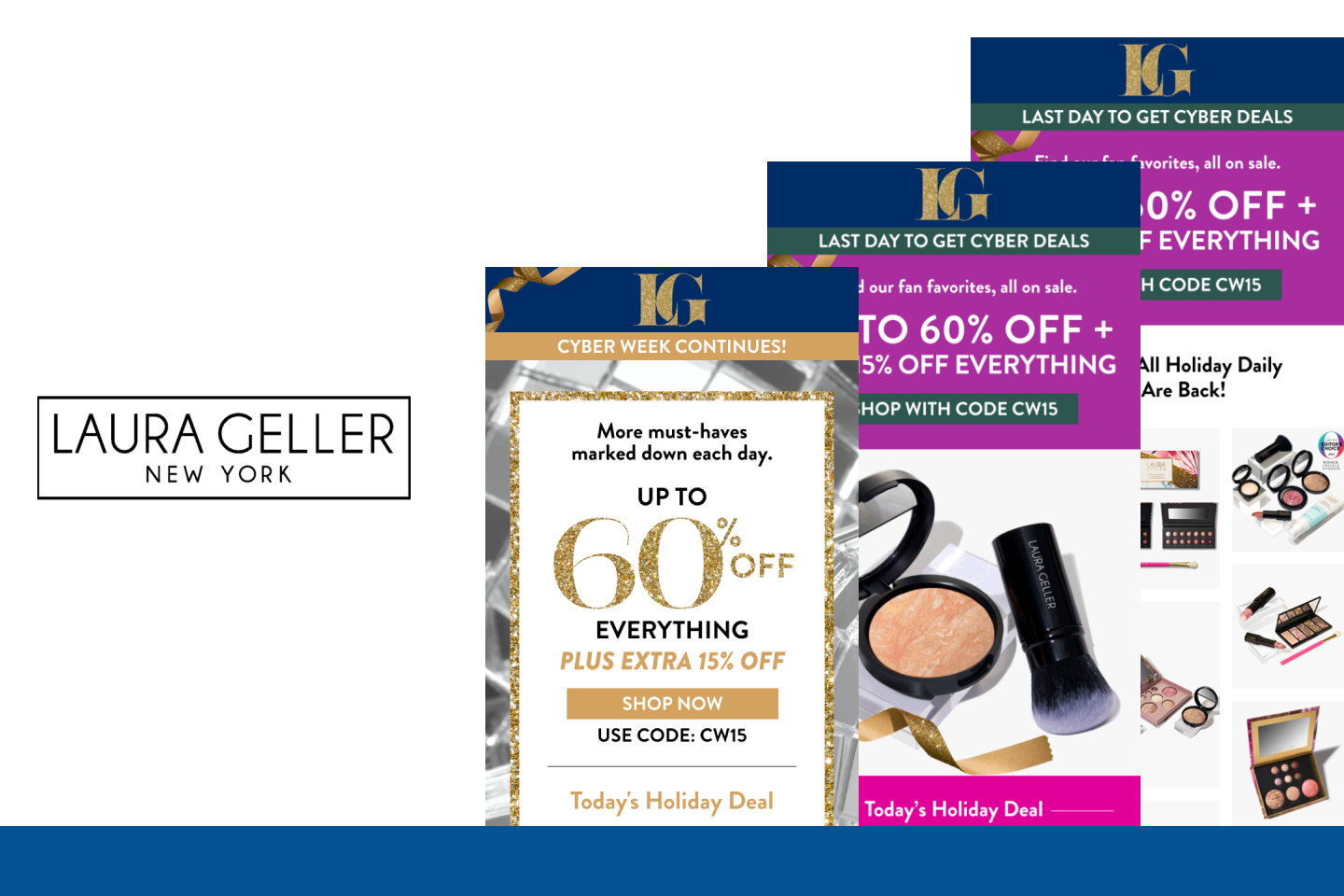
Months of audience management and offer optimization fuel soaring holiday sales for this beauty brand. Read this case study to see how we partnered with

Starbucks is experimenting with a new rewards program that may be familiar to anyone who has accumulated punch cards from their local coffee shop over

Your Subject Lines Are a Crapshoot—Here’s How to Fix Them Check out the full report Demystifying Subject Lines from Alchemy Worx. Have you ever spent

Months of audience management and offer optimization fuel soaring holiday sales for this beauty brand. Read this case study to see how we partnered with

Starbucks is experimenting with a new rewards program that may be familiar to anyone who has accumulated punch cards from their local coffee shop over

What comes after testing send time, and why it works across email and SMS In the last article, we challenged the idea of a universal
Litmus Launches Individual-level TrackingLast July we used Litmus Analytics to help us decide whether we should optimise Email-Worx for viewing on mobile devices. We found that only 3% of those opening that issue, did so on a mobile – certainly not enough to justify redesigning our templates. Although Litmus Analytics told us more about what devices and email clients our subscribers were using to open and read our email communications than we had known before, it left a huge question begging. Who were these people?
The people who receive your emails are most likely to examine its contents through a preview pane at the bottom of their inbox. So what should people see when you look at your email in their preview pane? And how can you make sure that your content gets the message across – however people choose to view it?
As we all know, Scotland voted “No” to independence, but it was a hard-fought campaign and the Yes Scotland campaign turned what could have been a landslide into a very tight race that got Scotland many concessions. Following our pre-referendum post last week which compared Yes Scotland and Better Together email campaign data up until 9th September, we wanted to see what happened in the inbox in the critical last week leading up to polling day. We found that the Yes Scotland campaign’s email send volumes grew larger still than emails from Better Together in the last week while open rates remained constant - meaning more subject lines read and more total opens for Yes Scotland emails. The Yes Scotland campaign’s polling result crept upwards, continuing the upward trend that began in mid-July.
“How did an 18-year old intern beat an Alchemy Worx subject line expert in a split test?” You might think there isn’t much ‘Naked’ about a run-of-the-mill subject line split test but this one was a little different. Here’s why…
Subject lines are often given the least time and effort when an email campaign is created, but they are one of the biggest factors in an email’s success. There is just no single rule, tactic or word that works every time. Best practices sometimes fail and A/B testing is flawed by the time variable when a test is repeated or rolled out.
Gmail Priority Inbox, Tabbed Inbox, Sponsored Promotions, image caching, Grid View – email marketers are getting used to new ‘game-changing’ features in Gmail. However none of these so far have really changed email marketing - just added a few considerations and hopefully made email marketers more conscious of how their emails are read. So news that Gmail is adding another new feature – this time an unsubscribe link in the header – should come as no big surprise.
The Amazon Fire Phone entered the Smartphone market last year but following a lukewarm reception and disappointing sales, it has been overlooked by many – including email marketers.
However with the weight of one of the world’s largest online retailers behind it, we doubt this will be the last we see of it. And let’s not forget that there are already people out there viewing emails on this device.
So how does the Amazon Fire Phone handle email, and what does it mean for how you design and code? Here we take a look at some of the key rendering and display issues you should be aware of.
These are the sort of questions we get asked very often here at Alchemy Worx, and they’re ones we’ve thought long and hard about. The answer isn’t a simple yes or no, however – for the very good reason that we think these are actually the wrong questions. Clients are often under pressure to meet open and click rate targets, and many marketers obsessively compare their scores with the industry average. But the problem with these rates is that they are very blunt instruments, of limited value for the sophisticated email marketer. Clicks and opens only tell you about the individual campaign or message – they tell you nothing about the people you’re trying to reach, engage, convert and sell to. Knowing, for instance, that your emails have an average open rate of 20%, 30% or even 40% doesn’t actually tell you very much about the impact your email campaign is having on your subscribers. You need to be looking not at how the campaign behaves but at how the people who got the message are behaving.
Problem 1: Spelinge misteakes
When it comes to email, the long tail is very long and very powerful indeed. Typically, 25% of the sales generated by a single email campaign happen more than 3 weeks after it was sent out, according to our research. The half-life of your open and click response can be measured in hours – typically 24-48 hours – but when it comes to sales the half-life of an email campaign isn’t measured in hours but in days – typically a week or more.